Written by: ALEN, Surfactant Application Specialist, MOSINTER GROUP | 15 years in "Industrial & Home Care Surfactants", "Textile Auxiliaries", "Metalworking Surface Active Compounds", "Eco-friendly Chemical Formulations"
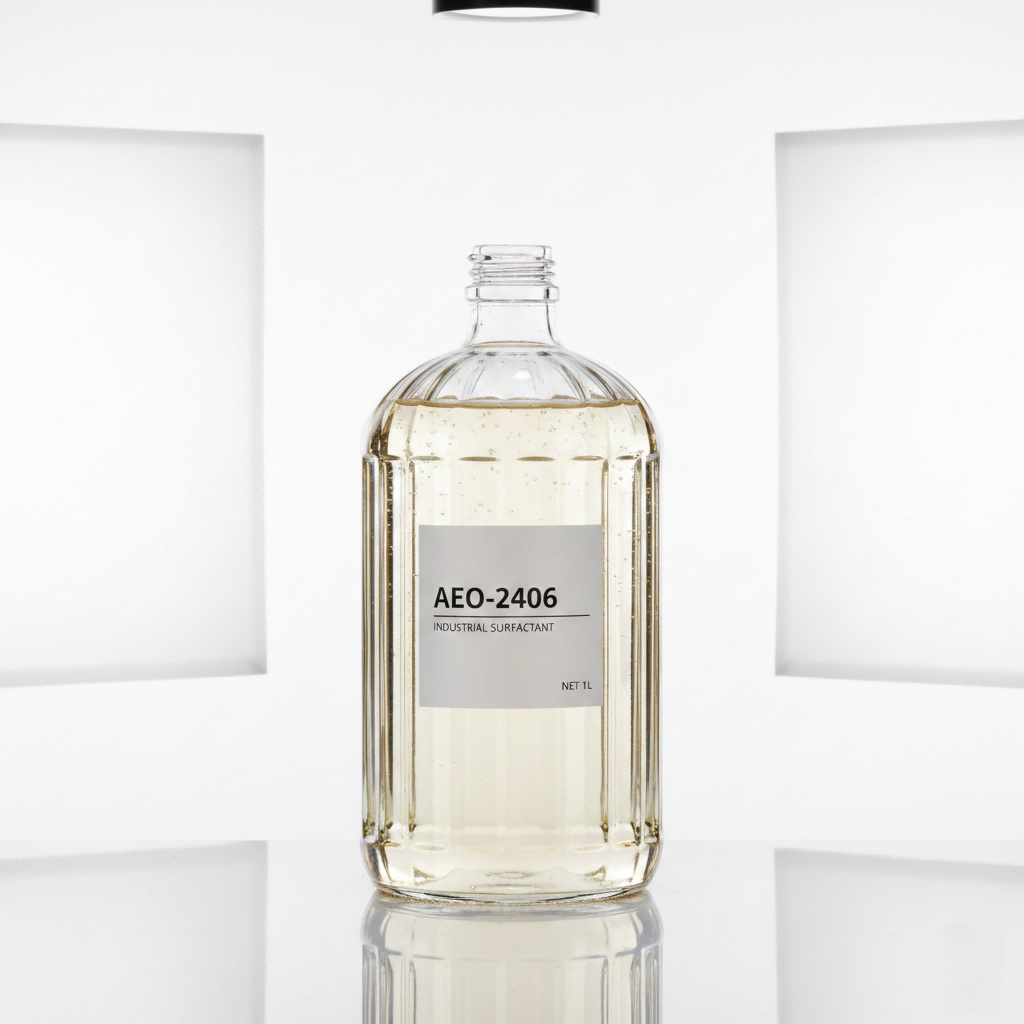
AEO-2406 fatty alcohol polyoxyethylene ether liquid surfactant
Three procurement managers contacted me last month with the same frustration: their current scouring agents either leave residues on fabrics or require excessive heating, driving up energy costs. One textile mill in Vietnam reported spending 40% more on steam than necessary because their detergent couldn’t work effectively below 80°C. If you’re facing similar challenges in your pre-treatment process, this guide will show you a more efficient solution.
AEO-2406 is a nonionic fatty alcohol polyoxyethylene ether (6 EO units) designed specifically for textile pre-treatment processes. Based on natural fatty alcohols with narrow molecular weight distribution, this scouring agent delivers superior emulsification and penetration while enabling low-temperature processing at 60-70°C, reducing energy consumption by up to 35% compared to conventional alkaline scours.
For detailed technical specifications, visit: AEO-2406 Product Page
Table of Contents
1. What Is AEO-2406 and How Does It Work in Textile Processing? 2. Why Choose AEO-2406 Over Traditional Scouring Agents? 3. Technical Specifications: Understanding the Numbers 4. Application Guidelines for Optimal Performance 5. Environmental and Safety Considerations 6. Frequently Asked Questions
1. What Is AEO-2406 and How Does It Work in Textile Processing?
Many textile processors struggle with inconsistent scouring results, particularly when switching between fiber types or processing at lower temperatures to save energy.
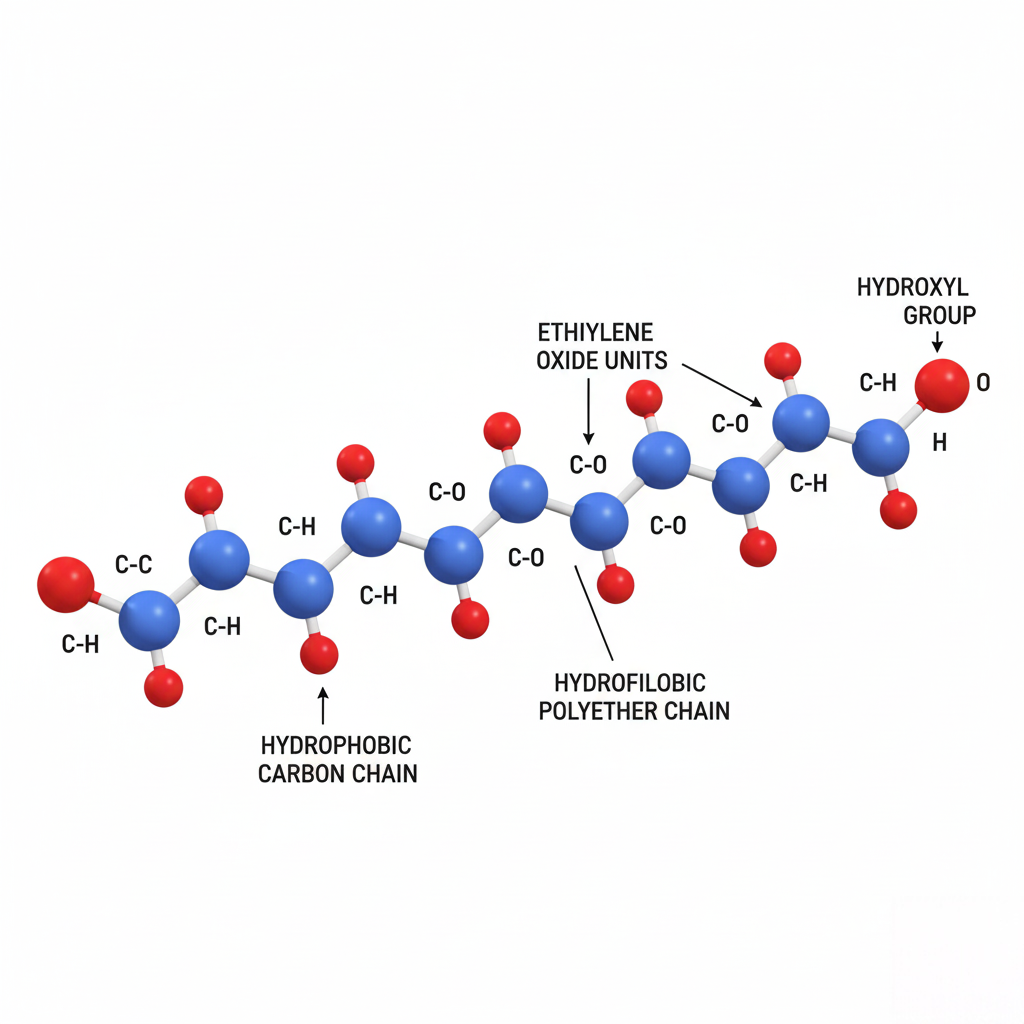
AEO-2406 is a fatty alcohol ethoxylate with 6 ethylene oxide (EO) units, classified as a nonionic surfactant. The “24” refers to the carbon chain length (C12-C14), while “06” indicates the degree of ethoxylation. This specific structure provides balanced hydrophilic-lipophilic properties (HLB value: 11.5), making it highly effective for both wetting and emulsification in aqueous textile processing.

textile scouring process industrial manufacturing facility equipment
According to research published on ScienceDirect, alcohol ethoxylates are produced through the ethoxylation of fatty alcohols, creating surfactants with the general structure RO(CH₂CH₂O)nH. The molecular architecture of AEO-2406 enables it to reduce surface tension to approximately 27.4 mN/m, facilitating rapid fiber penetration.
The mechanism of action involves three simultaneous processes:
Wetting: The surfactant molecules orient at the fiber-water interface, dramatically reducing contact angle and allowing processing liquids to spread uniformly across fabric surfaces. AEO-2406 achieves complete wetting in 60 seconds, significantly faster than many conventional agents.
Emulsification: Natural oils, sizing agents, and spinning lubricants are solubilized into micelles, preventing redeposition onto fibers. The balanced HLB value ensures stable emulsions even in hard water conditions.
Penetration: The narrow molecular weight distribution results in consistent penetration behavior, crucial for uniform dyeing in subsequent processes. Unlike broader-distribution products, AEO-2406 maintains predictable performance across varying fabric weights.
Property | Specification | Benefit |
Appearance (25°C) | Liquid | Easy handling and dosing |
Color (Pt-Co) | ≤30 | No fabric staining |
Active Content | ≥99.7% | Consistent performance |
Cloud Point | 76.0°C | Stable at process temperatures |
Surface Tension | 27.4 mN/m | Excellent wetting efficiency |
HLB Value | 11.5 | Balanced emulsification |
Wetting Time | 60 seconds | Rapid fiber penetration |
2. Why Choose AEO-2406 Over Traditional Scouring Agents?
The shift toward sustainable textile processing has created demand for surfactants that perform effectively at lower temperatures while meeting environmental regulations.
AEO-2406 offers three critical advantages over alkylphenol ethoxylates (APEOs) and conventional scouring agents: (1) APEO-free formulation complying with international environmental standards, (2) 35% energy savings through low-temperature processing capability, and (3) narrower molecular weight distribution ensuring reproducible results across production batches.

surfactant performance testing laboratory comparison analysis charts
What most suppliers won’t tell you is that the molecular weight distribution significantly impacts consistency. Conventional fatty alcohol ethoxylates often contain 15-25% unreacted alcohol and byproducts, creating batch-to-batch variation. AEO-2406’s controlled synthesis process maintains byproduct levels below 0.3%, ensuring your scouring recipe performs identically from one production run to the next.
Based on MOSINTER GROUP’s sales data from 200+ textile clients in 2024-2025, the most requested configuration for cotton scouring is 2-4 g/L AEO-2406 at 65-70°C, compared to traditional processes requiring 80-95°C. This temperature reduction translates to measurable cost savings: a mid-size mill processing 50,000 kg fabric daily can save approximately $12,000 annually on steam costs alone.
The environmental profile deserves emphasis. As detailed by the European Chemicals Agency (ECHA), fatty alcohol ethoxylates are readily biodegradable and do not bioaccumulate. Unlike nonylphenol ethoxylates, which China’s Ministry of Ecology and Environment added to the Key Controlled New Pollutants List in 2023, AEO-2406 meets current and anticipated environmental regulations in all major markets.
Factor | AEO-2406 | Traditional NP/OP Surfactants |
Environmental Status | APEO-free, biodegradable | Restricted/banned in many regions |
Processing Temperature | 60-70°C | 80-95°C |
Energy Savings | ~35% | Baseline |
Wetting Time | 60 seconds | 120-180 seconds |
Molecular Distribution | Narrow (<5% variation) | Broad (15-25% byproducts) |
Cloud Point Stability | 76°C (stable) | Often <60°C (phase separation risk) |
3. Technical Specifications: Understanding the Numbers
Specification sheets can be confusing, especially when you’re comparing products from different suppliers. Here’s what the key parameters actually mean for your process.
fatty alcohol ethoxylate molecular structure chemical diagram
The hydroxyl value (122 ± 4 mg KOH/g) indicates the concentration of reactive hydroxyl groups, directly correlating with the product’s ability to form hydrogen bonds with textile fibers. A tightly controlled range (±4 mg KOH/g) ensures consistent performance.
Cloud point (76.0°C) represents the temperature at which the surfactant solution becomes turbid due to reduced solubility. For textile scouring, you want a cloud point significantly higher than your process temperature to avoid phase separation. AEO-2406’s 76°C cloud point provides a safe margin for operations at 60-70°C.
Foam height (173 mm) is measured under standardized conditions and indicates foaming tendency. Moderate foam is actually desirable in textile scouring as it helps lift impurities away from fabric surfaces. However, excessive foam can impede mechanical action and rinse efficiency. The 173 mm value strikes an optimal balance.
Emulsification performance (1107 seconds) measures how long an oil-water emulsion remains stable. Higher values indicate stronger emulsifying power, essential for removing natural oils, waxes, and synthetic sizing agents from fibers.
Parameter | Value | Test Method/Note |
Ethoxylation Degree (EO) | 6 | Controlled synthesis |
Appearance at 25°C | Liquid | Visual inspection |
Color (Pt-Co) | ≤30 | APHA/Hazen scale |
Active Content | ≥99.7% | Minimum purity |
Cloud Point | 76.0°C | Base B (5% in 25% BDG) |
Surface Tension | 27.4 mN/m | At 25°C, 0.1% solution |
HLB Value | 11.5 | Calculated (Griffin method) |
Hydroxyl Value | 122 ± 4 mg KOH/g | ISO 4629 |
Wetting Time | 60 seconds | Canvas disk method |
Foam Height | 173 mm | Ross-Miles method |
Emulsification Time | 1107 seconds | Stability test |
4. Application Guidelines for Optimal Performance
Achieving consistent results requires understanding the relationship between concentration, temperature, time, and mechanical action in your specific process.
For cotton and cotton-blend scouring, use 2-4 g/L AEO-2406 at 65-70°C with pH 9-10 (adjusted with soda ash or caustic). Process time: 20-30 minutes with moderate mechanical agitation. For synthetic fibers requiring lower alkalinity, reduce concentration to 1-2 g/L at 55-65°C, pH 7-8.
In my experience working with pharmaceutical-grade textile manufacturers, the most common mistake is insufficient rinsing. Even though AEO-2406 is low-foaming, thorough rinsing (2-3 rinse cycles) is essential to achieve the capillary effect values required for medical textiles.
For cold pad-batch processes, AEO-2406 can be combined with hydrogen peroxide bleaching systems. The recommended formulation: 2-3 g/L AEO-2406, 3-5 g/L hydrogen peroxide (35%), 2-3 g/L sodium hydroxide, 1-2 g/L stabilizer. Pad at room temperature, batch for 6-8 hours at 25-30°C.
Fiber Type | Concentration | Temperature | Time | pH |
Cotton (heavy) | 3-4 g/L | 65-70°C | 25-30 min | 9-10 |
Cotton (light) | 2-3 g/L | 60-65°C | 20-25 min | 9-10 |
Cotton/Polyester | 2-3 g/L | 60-65°C | 20-25 min | 8-9 |
Viscose/Tencel | 1.5-2.5 g/L | 55-60°C | 15-20 min | 7-8 |
Synthetic fibers | 1-2 g/L | 55-60°C | 15-20 min | 7-8 |
Compatibility Considerations:
AEO-2406 is compatible with anionic, cationic, and other nonionic surfactants, allowing flexible formulation. When combining with sequestering agents (EDTA, phosphonates), add these first to the bath to prevent precipitation in hard water. The product exhibits excellent stability in alkaline conditions up to pH 12, making it suitable for mercerization processes.
Water hardness tolerance: AEO-2406 performs effectively in water hardness up to 300 ppm (as CaCO₃). For extremely hard water (>300 ppm), add 0.5-1 g/L chelating agent to prevent calcium soap formation.
5. Environmental and Safety Considerations
Regulatory compliance has become non-negotiable in textile supply chains, particularly for exports to Europe and North America.
AEO-2406 is classified as non-toxic and non-flammable, with favorable environmental and occupational safety profiles. The product is APEO-free, readily biodegradable (>60% within 28 days per OECD 301 guidelines), and does not bioaccumulate. It complies with REACH regulations and is suitable for GOTS-certified organic textile production.
AEO-2406 industrial packaging 200kg drums logistics warehouse
According to Wikipedia’s entry on ethoxylation, alcohol ethoxylates are considered high production volume (HPV) chemicals by the US EPA, with extensive safety and environmental data available. Toxicity studies show LD₅₀ (oral, rat) values exceeding 5 g/kg, indicating very low acute toxicity.
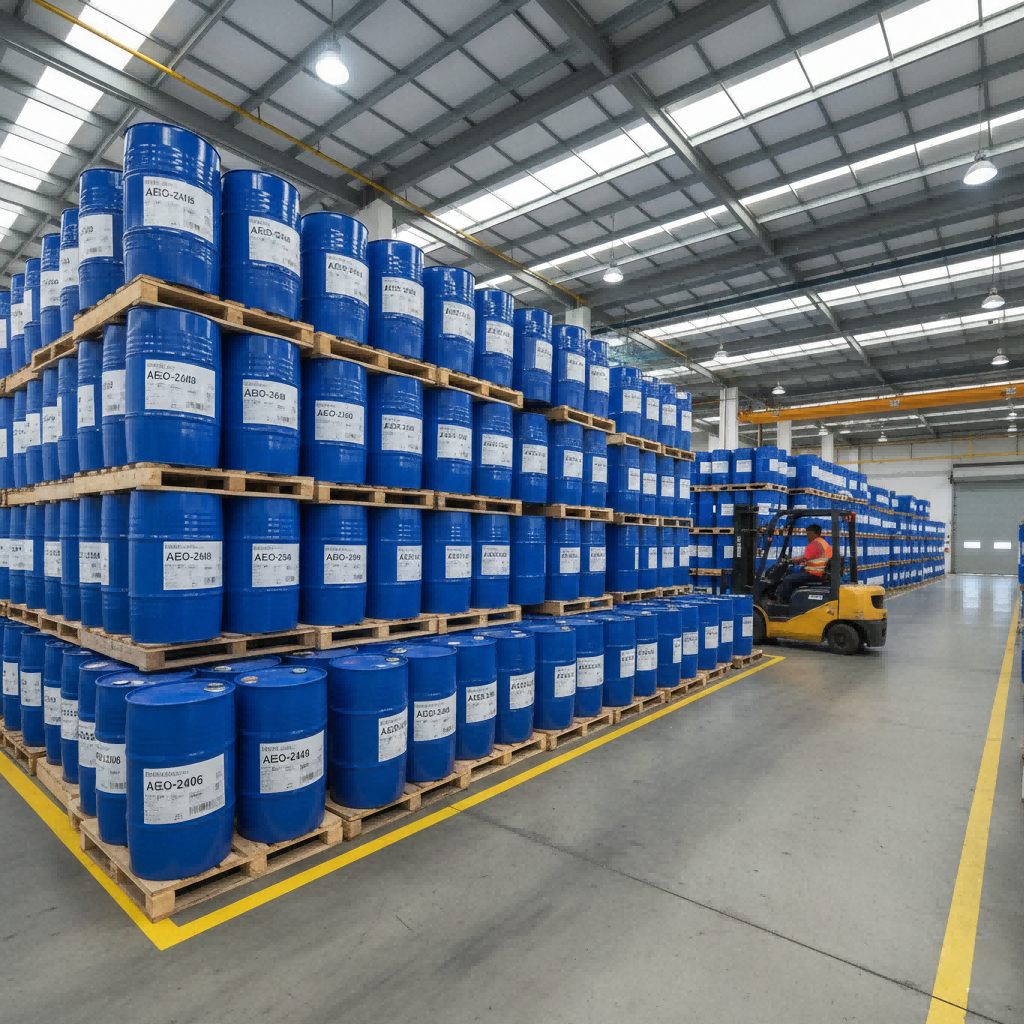
Handling and Storage: Store in a dry, ventilated area at temperatures between 5-40°C. Shelf life is 2 years under proper storage conditions. The product is supplied in 200 kg drums with tamper-evident seals. Transport as a general chemical; no special hazardous material designation required.
Personal protective equipment recommendations: Chemical-resistant gloves and safety glasses are recommended during handling. Good ventilation is adequate; no respiratory protection typically necessary. In case of skin contact, rinse with water; for eye contact, flush immediately with water for 15 minutes and seek medical attention if irritation persists.
Safety Parameter | Classification | Notes |
Acute Toxicity | Non-toxic | LD₅₀ >5000 mg/kg (oral, rat) |
Skin Irritation | Non-irritant | Per OECD 404 |
Eye Irritation | Mild irritant | Rinse immediately if contact occurs |
Flammability | Non-flammable | No special fire precautions needed |
Biodegradability | Readily biodegradable | >60% in 28 days (OECD 301) |
Bioaccumulation | No | Log Kow <3 |
APEO Content | 0% | APEO-free certified |
6. Frequently Asked Questions
Q1: Is AEO-2406 the same as AEO-9?
No. The number indicates the ethoxylation degree (number of ethylene oxide units). AEO-2406 has 6 EO units with an HLB of 11.5, making it ideal for scouring and emulsification. AEO-9, with 9 EO units, has higher water solubility (HLB ~13) and is commonly used in detergent formulations. For textile pre-treatment, AEO-2406 provides better oil removal and wetting balance.
Q2: Can I use AEO-2406 in cold water processes?
Yes, but with reduced efficiency. AEO-2406 remains active at room temperature and can be used in cold pad-batch processes when combined with appropriate auxiliaries. However, for jet or winch scouring, temperatures of 60-70°C significantly improve performance and reduce processing time by 30-40%.
Q3: How does AEO-2406 perform with hard water?
As a nonionic surfactant, AEO-2406 is insensitive to water hardness up to 300 ppm. Unlike anionic surfactants that precipitate with calcium and magnesium ions, nonionic fatty alcohol ethoxylates maintain stable performance. For water >300 ppm hardness, add sequestering agents to prevent interference with other bath components.
Q4: What is the minimum order quantity and delivery time?
MOSINTER GROUP supplies AEO-2406 with a minimum order of one drum (200 kg). For established clients, sample quantities (1-5 kg) are available for trial purposes. Standard delivery time is 7-14 days for stock items, 21-30 days for custom batches. Express shipping available for urgent requirements.
Q5: Does AEO-2406 meet organic textile standards?
Yes. AEO-2406 is APEO-free and biodegradable, meeting the requirements for auxiliaries used in GOTS (Global Organic Textile Standard) certified production. The product is derived from natural fatty alcohols and contains no heavy metals or restricted substances. Documentation for certification audits is available upon request.
Conclusion
AEO-2406 represents a practical solution for textile mills seeking to reduce energy costs while maintaining or improving scouring quality. Its low-temperature capability, environmental compliance, and consistent performance make it particularly valuable in today’s competitive and regulated textile industry.
Get Your AEO-2406 Sample Today
MOSINTER GROUP has supplied high-quality surfactants to the textile industry for 21 years. We offer technical support, application testing, and custom formulation services to help you optimize your pre-treatment processes.
Contact Information:
WhatsApp: +8618989305995
Email: info@mos-surfactant.com
Website: https://mos-surfactant.com