
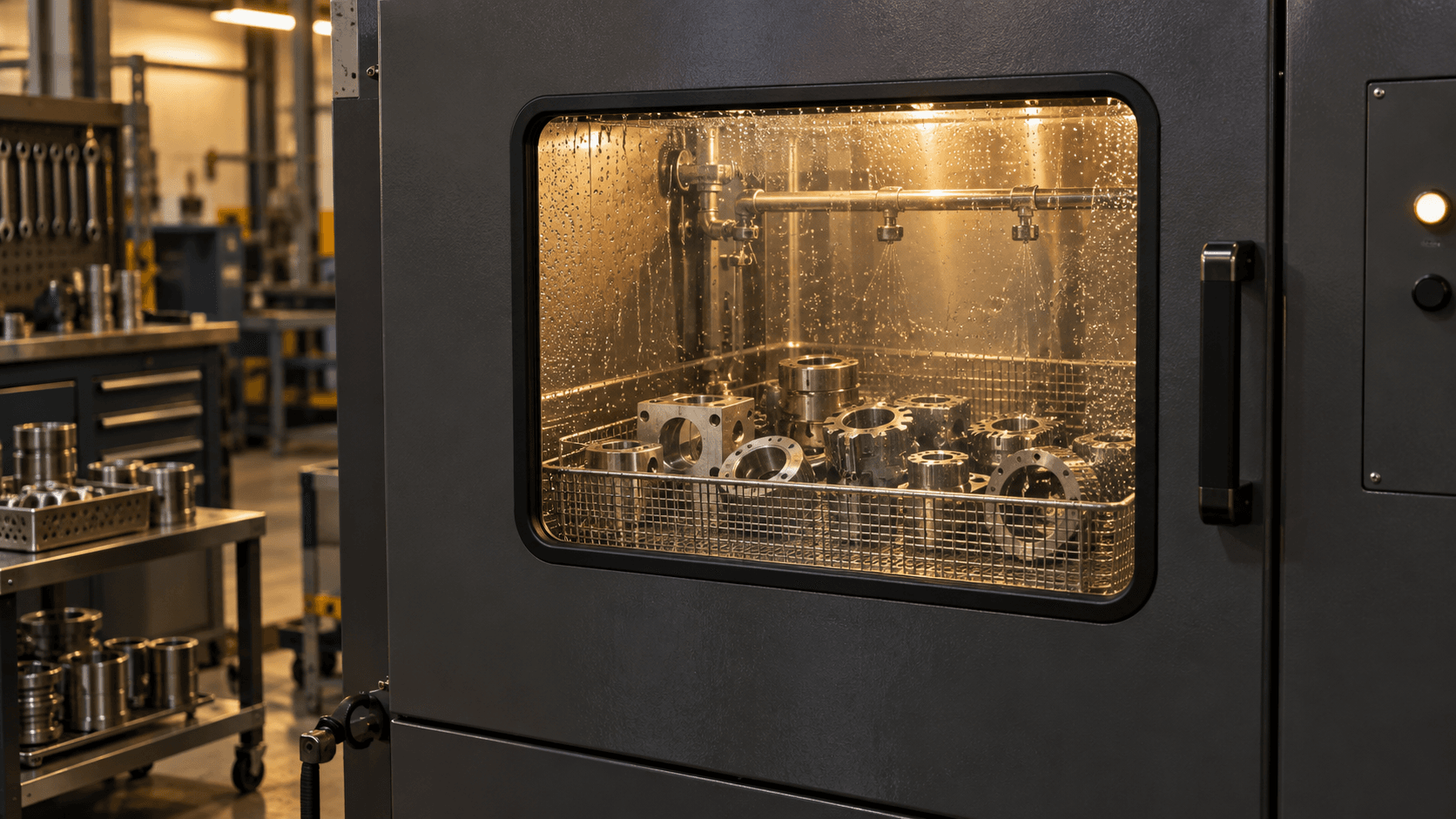
A higher cloud-point number does not automatically identify the better nonionic surfactant. First establish whether the two numbers were measured in the same medium, at the same concentration and by a comparable method. Then test the finished cleaner under the intended conditions. This is especially important when selecting an alcohol ethoxylate for heated industrial washing.
Two cloud-point numbers may describe different tests
Cloud point is the observed onset of cloudiness under defined test conditions. It is not simply the melting point of the supplied liquid or paste. The published scope of ASTM D2024 concerns certain nonionic surface-active agents; it is not a universal method for every surfactant or finished detergent. Some materials do not give a useful cloud point within the applicable aqueous test range.
BASF's industrial-cleaning guide distinguishes cloud-point methods using different concentrations and media, including water and a glycol-ether solution. A solvent-containing measurement must not be silently treated as a water-only result. Temperature is only one part of the specification.
The MOS natural C12–C14 alcohol ethoxylate record describes an aqueous cloud-point test, while the ultra-low-foam alcohol ethoxylate record describes a glycol-ether-containing test medium. Those method descriptions flag a comparison problem; they do not establish a common scale for ranking the two grades. Ask for the exact quoted grade and current method before using either catalogue range as a purchasing limit.
Use the finished cleaner to define the operating window
Start with the actual cleaning concentration, make-up water, temperature range, soils and contact method. A simple surfactant solution and a formulated bath containing builders, salts, solvents or other surfactants are different test systems. Whether the finished mixture stays clear and whether it cleans adequately are separate observations.
Run a small controlled temperature series on the complete formulation, using the actual intended water. Keep composition and mixing history constant; record temperature, appearance and any separation after holding and cooling. This proposed qualification sequence is an engineering approach, not an ASTM acceptance procedure or a MOS guaranteed operating range. Do not choose arbitrary temperatures outside the grade's handling guidance.
| Observation | Next useful check | What it does not prove |
|---|---|---|
| Two TDS values differ | Compare method, medium, concentration and exact grade | That the higher number gives better cleaning |
| Finished bath turns cloudy | Record temperature and whether cloudiness reverses on cooling | Automatic product failure or irreversible decomposition |
| Persistent phase separation appears | Check composition, hold time and recovery after cooling | That cloud point alone identifies the cause |
| Bath stays clear | Test soil removal and rinsing on the relevant substrate | Adequate detergency, low foam or material compatibility |
Separate turbidity, foam and cleaning acceptance
For a spray washer, foam can affect circulation and rinsing even when the bath looks clear. For another process, visible haze may be acceptable if cleaning, stability and equipment requirements are met. Define the acceptance criteria before comparing samples: representative soil removal, rinse residue, foam under the relevant agitation, and compatibility with the actual metal or other substrate.
Compare candidate grades at a controlled formulation basis. If active matter differs, equal supplied mass can obscure the comparison. Change one deliberate variable at a time and retain a reference formulation. A beaker appearance test cannot reproduce every nozzle, recirculation or soil-loading condition; move to an approved equipment trial only after the initial screen.
Specify a comparable nonionic-surfactant enquiry
Use the C12–C14 alcohol ethoxylate Product page for the primary enquiry and identify whether the ultra-low-foam family is also relevant. Send the formulation role, desired active basis, water information, cleaning temperature range, contact method, soils, substrate, sample quantity, expected order volume, packaging and destination. Request the exact-grade TDS/SDS, cloud-point method and test medium, and a proposed sample comparison. No universal cleaning temperature or foam guarantee follows from the family name.
Technical references: ASTM D2024 published scope and BASF industrial and institutional product guide. External method examples explain the comparison; they are not MOS grade specifications.