
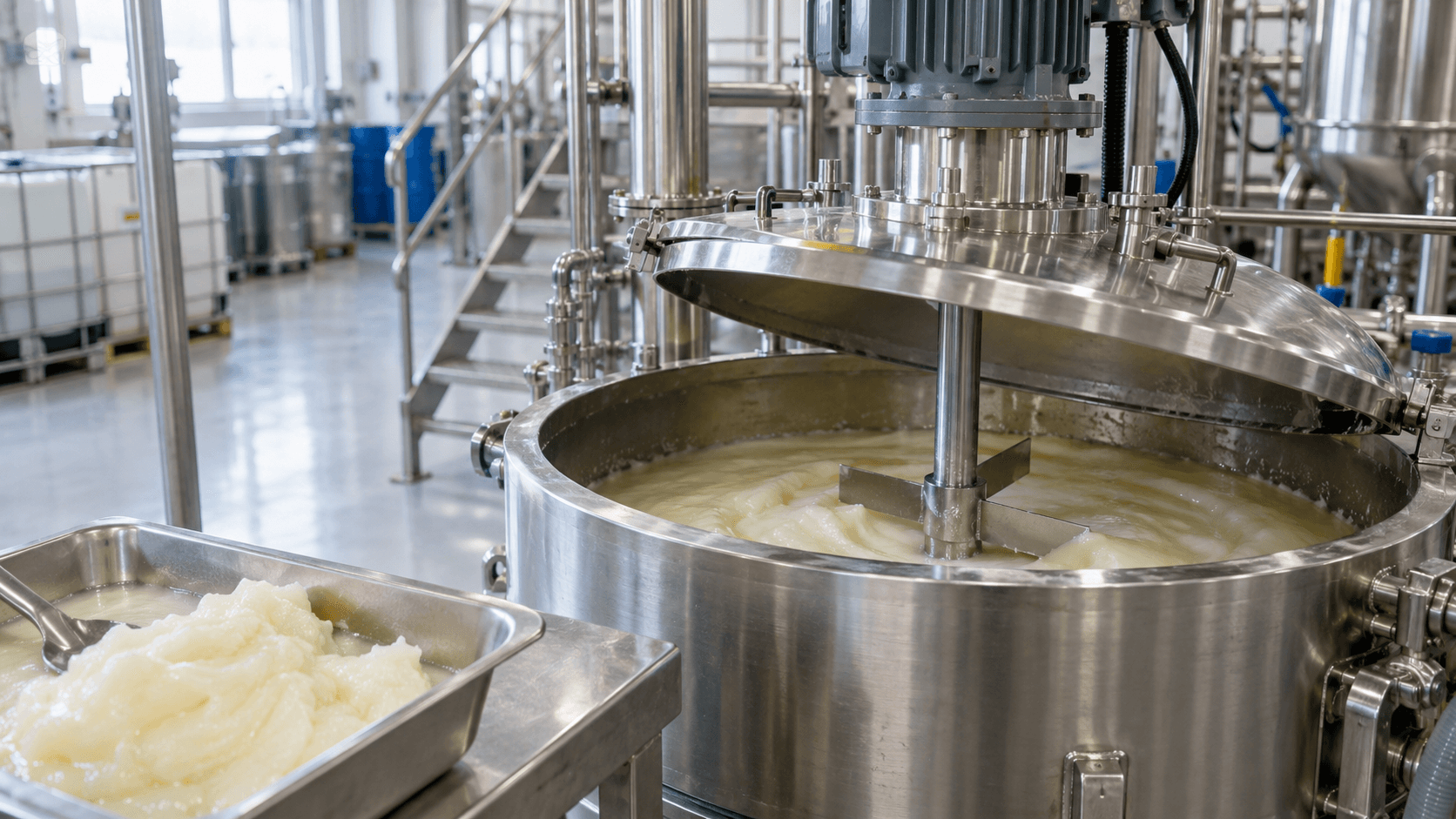
Ammonium lauryl sulfate (ALS) and ammonium laureth sulfate (ALES) are different surfactant identities. ALS is an alkyl sulfate; ALES is an ether sulfate. The useful purchasing question is whether the offered grade works in your complete detergent formula, not which name sounds more advanced. MOS provides separate ALES and ALS Product pages. Their recorded white or light-yellow paste appearance does not establish equal formula behavior or a one-for-one substitution.
Identify the supplied material before comparing the quotation
Ask for the exact grade, full chemical/ingredient identity and current TDS/SDS and lot COA. Check whether the quotation concerns one surfactant or a supplied blend and whether any auxiliaries are included. ALS/ALES are ammonium salts; an existing sodium SLS/SLES specification is not automatically the specification for either. For ALES, confirm the offered ether-sulfate grade rather than assuming one ethoxylation distribution for every product sold under the abbreviation.
| Compare this | Supplier information | Buyer’s evaluation input |
|---|---|---|
| Identity and form | ALS or ALES, exact grade, blend components if any | Current raw material and substitution purpose |
| Active-matter basis | Offered-grade result and assay method | Compare on the agreed active basis, not delivered mass alone |
| pH and impurities | Preparation concentration, method and relevant impurity limits | Water, target final pH and application requirements |
| Viscosity response | Grade-specific guidance; no universal salt curve assumed | Complete formula and controlled salt/mixing conditions |
| Acceptance | Agreed stability, foam and process checks | Control formula, storage conditions and sample identity |
Use an active-basis trial, then test the whole formula
Keep a control with the currently accepted material. Establish the offered grade’s actual active-matter basis before calculating trial additions. Record water quality, order of addition, preparation temperature, mixing and pH method. If the test changes both surfactant identity and salt adjustment, keep those changes separate in the trial record. Matching delivered mass can unintentionally change the active loading and make the comparison misleading.
Measure the agreed final-formula properties, including viscosity after equilibration, foam under relevant conditions and stability during the defined storage test. If salt adjustment is part of the formula, evaluate its response in that complete system. Do not assume that a good result in water carries over to fragrance, co-surfactants or the final detergent concentrate. A supplier’s recommended trial conditions are a starting point for your validation, not a finished-product performance guarantee.
Keep identity, mildness and sourcing claims separate
An ether-sulfate identity does not by itself prove lower irritation, biodegradability, natural-origin certification or regulatory acceptance of the final formula. Confirm any such requirement using the actual grade’s documentation and the relevant finished-product assessment. This guide adopts no numerical purity, pH, active-matter or impurity promise from ambiguous catalogue fields. The purchasing specification must be tied to the offered grade and method.
Request a matched-grade sample and quotation
Use the ALS Product page or ALES Product page with the current raw material, target application, full formula constraints, required active basis, pH/water conditions and sample acceptance plan. Include order quantity, annual demand, packaging and destination; request offered-grade TDS/SDS and lot COA. State which impurity/test-method requirements are essential. Ask the supplier to confirm substitutions and any application or sourcing claims explicitly.
ALS/ALES formulation FAQ
Are ALS and ALES the same as SLS and SLES?
No. ALS/ALES are ammonium surfactants; SLS/SLES are sodium surfactants. Use the actual material identity and grade specification.
Can ALS replace ALES by equal delivered weight?
Do not assume it. Compare the offered-grade active basis and validate the complete formulation against a control.
Does ALES always give a milder formula?
No universal conclusion follows from the ingredient name. Evaluate the actual grade, complete formula and required assessment.
Which data should accompany an ALS/ALES enquiry?
Provide the current grade, application/formulation conditions, active and impurity requirements, sample method, quantity, packaging, destination and document needs.